Lift Your Ride, Protect Your Spine: Performance Upgrades That Keep Athletes Moving Right
You've dialed in your squat depth, optimized your hip hinge, and spent real money on a quality lifting belt. But then you spend 90 minutes in a stock sedan with a reclined seat and a steering wheel that forces your shoulders to round forward — and you undo a meaningful portion of that postural work before you even walk into the gym.
For active drivers, the vehicle isn't separate from the training environment. It's part of it. And the upgrades you choose — or don't choose — directly affect how your body arrives at every workout, every competition, and every recovery window.
Let's talk about the customization choices that actually matter for athletic alignment.
Why Your Stock Setup Is Working Against You
Most factory vehicle configurations are designed around a statistical average occupant — not an athlete with specific postural demands. The default seat angle encourages posterior pelvic tilt (your lower back rounds, your pelvis tucks under), which compresses the lumbar discs and shuts off glute activation. Do that for an hour, and your posterior chain — the engine of virtually every athletic movement — is partially switched off before your session even starts.
The steering wheel height and column angle in stock configurations are similarly generic. For taller athletes or those with longer torsos, reaching up or out to the wheel creates chronic shoulder elevation and forward head position. Over time, this contributes to the kind of upper-crossed syndrome that makes bench pressing painful and overhead work feel impossible.
The good news: almost all of this is fixable. And fixing it makes your car faster and your training more productive.
Suspension: More Than Just Ride Height
When most people think suspension upgrades, they think either lowering kits for aesthetics or lift kits for off-road clearance. But for the performance-oriented driver who's also an athlete, suspension choice has a real ergonomic dimension.
Lowering Springs and Coilovers — A modest drop (1–1.5 inches) on a sport sedan or hatchback can actually improve the hip-to-knee angle for many drivers, particularly those in the 5'8"–6'0" range. When the seat is closer to the ground relative to the pedals, the hip joint sits in a more neutral position, reducing anterior hip flexor compression. Brands like KW, Tein, and BC Racing offer adjustable coilovers that let you dial in exact ride height — critical for dialing in that ergonomic sweet spot.
Lift Kits for Trucks and SUVs — Here's where it gets interesting. A 2–3 inch lift on a truck or SUV raises the entire seating position, which can actually worsen lumbar alignment for drivers who are already tall. However, it also changes the entry/exit angle of the vehicle significantly — and repeated awkward ingress/egress is a genuine injury risk for athletes with hip or knee issues. If you're running a lifted truck, pairing the lift with adjustable running boards or a drop step is worth factoring into your build.
Bushing Upgrades and Subframe Alignment — Less glamorous but genuinely impactful: stiffer polyurethane bushings reduce chassis flex and vibration transmission through the seat and floor. Less vibration means less chronic low-grade muscle tension in the back and hips during long drives. For athletes managing inflammation or injury, this is a real quality-of-life upgrade.
Seat Swaps: The Biggest Bang for Your Postural Buck
If there's one upgrade that delivers the most direct athletic benefit, it's a quality aftermarket seat. And the options have gotten remarkably good.
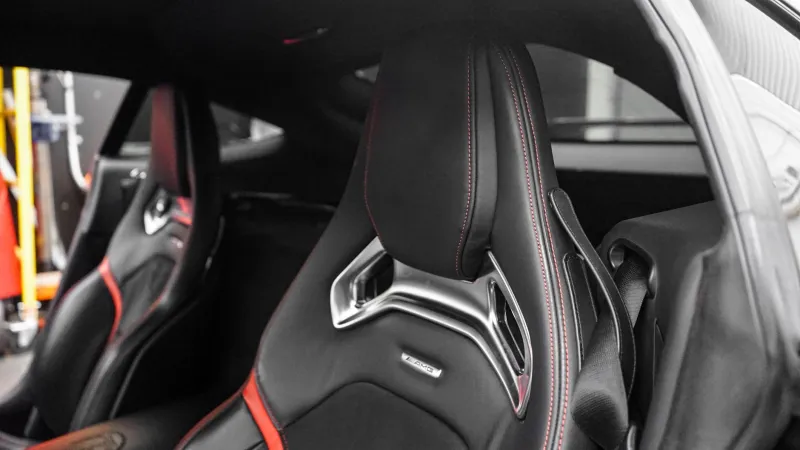
Bolstered Sport Seats — Seats from brands like Recaro, Sparco, or Bride offer lateral bolstering that maintains spinal alignment during cornering without the occupant having to brace with their arms. For athletes, this means the core and spine are supported passively — you're not unconsciously tensing to stay upright through every highway on-ramp. That matters over the course of a long drive.
Seat Height Adjustment and Cushion Angle — Look for seats that offer meaningful seat pan tilt adjustment. A slight forward tilt (2–5 degrees) encourages an anterior pelvic tilt, which activates the lumbar extensors and keeps the natural spinal curve intact. This is the seated equivalent of a good hip hinge setup — your spine is loaded correctly, not compressed.
Lumbar Support Systems — Aftermarket seats with adjustable lumbar inserts allow you to position the support exactly where your L3–L5 vertebrae need it, rather than where the factory engineers guessed the average driver might want it. Athletes with a history of lower back tightness should treat this as a non-negotiable feature.
Steering Wheel Modifications for Posture and Reach
The steering wheel position determines where your shoulders, arms, and upper back spend their time — and for athletes, that matters.
Telescoping Column Upgrades — Many factory steering columns offer limited telescoping range. Aftermarket column adapters and quick-release hubs allow you to set the wheel at the exact distance that keeps your elbows slightly bent (around 120 degrees) and your shoulders depressed — the same position you'd want for a cable row. Shoulders creeping up toward your ears during a commute? Your wheel is probably too far away.
Dish and Diameter — Smaller diameter wheels (13–14 inches vs. the stock 15+) require more wrist rotation to turn, which increases forearm engagement but can strain the wrist if the column angle isn't right. A deeper dish wheel brings the rim closer to the driver without changing the column position, effectively reducing reach. For athletes with shoulder mobility limitations, this can be a game-changer.
Tilt Adjustment — A wheel angled slightly upward relative to your thighs (rather than parallel to them) allows the wrists to sit in a more neutral position and reduces the tendency to pronate the forearms excessively. Small change, big cumulative impact.
Build It Like You Train It
At AutoFit, the philosophy is simple: your car is an extension of your athletic life. Every mile you drive is either contributing to or subtracting from your physical readiness. The athletes who get this — who treat their vehicle setup with the same intentionality they bring to their training environment — consistently show up to workouts with better posture, less chronic tightness, and more capacity to perform.
Choose your upgrades strategically. Your spine is the one piece of equipment you can't swap out.