Your Parking Lot Is a Warm-Up Zone — It's Time to Start Using It That Way

Photo: U.S. Army, CC BY 2.0, via Wikimedia Commons
Opinion piece time. And this one might sting a little.
The average gym-goer — even the serious ones — treats the moment they park as the official start of their training session. They've been sitting in a car for 30, 40, maybe 60 minutes. Their hips are flexed. Their thoracic spine is compressed. Their nervous system is still in commute mode. And then they walk straight to the squat rack, load the bar, and wonder why their first few sets feel terrible.
This is a fixable problem. And the fix starts before you ever open the gym door.
The Commute-to-Training Gap Nobody Addresses
Here's the thing about driving: it's physiologically similar to sitting at a desk, except you're also in a mildly alert, reactive state the whole time. Your hip flexors are shortened. Your glutes are disengaged. Your upper back has been rounded into your headrest. Your shoulders have been held in a slightly forward, steering-ready position.
Now think about what you're about to ask your body to do. Deadlifts. Overhead press. Box jumps. A 5K tempo run. Any of those movements demand full hip extension, spinal neutrality, shoulder external rotation, and posterior chain activation — the exact opposite of your current state.
A traditional warm-up inside the gym helps. But it takes time to undo the positional damage of a long drive, and most people's warm-ups aren't long enough or specific enough to fully address it. The solution isn't just a better gym warm-up. It's a pre-warm-up — one that starts in your car and continues in the parking lot.
Why This Actually Works: The Science of Pre-Activation
Dynamic warm-up research consistently shows that movement-based preparation — as opposed to passive stretching or simply walking in from the parking lot — meaningfully improves performance metrics. We're talking sprint speed, jump height, lift quality, and injury resilience. The mechanism is straightforward: you're increasing core temperature, improving neuromuscular recruitment, and priming the movement patterns you're about to load.
What's less discussed is the timing window. Studies on dynamic warm-up effectiveness generally show a performance benefit lasting 10–15 minutes after completion. If you're warming up at the gym entrance, walking to the locker room, changing, refilling your bottle, and then making your way to the training floor, that window may already be closing before you touch a weight.
Starting your warm-up in the car — and extending it into the parking lot — shifts that window forward. By the time you've changed and reached your training space, you're not starting from zero. You're already primed.
The In-Car Mobility Sequence (Yes, Really)
You don't need much space. You need intention and a few targeted movements that address what driving does to your body.
Before you turn the car off:
Thoracic extension over the headrest. Reach both arms overhead, lean back slightly into the headrest, and take three to five deep breaths while extending your upper back. This directly counteracts the forward rounding that builds up during a commute. It takes 30 seconds and it works.
Seated hip flexor activation. Sitting tall, drive one knee upward toward the roof as hard as you can and hold for two seconds. Alternate for 10 reps per side. You're waking up the hip flexors and starting to get blood moving into the lower body.
Neck circles and shoulder rolls. Not glamorous. Extremely effective at releasing the tension that builds in your cervical spine and upper traps during a focused drive.
Total time: two to three minutes. Still in the car. Engine off, hazards on if you need them.
The Parking Lot Sequence (10–12 Minutes)
Now you're out of the car. This is where the real prep happens. You've got pavement, maybe a curb, and your own bodyweight. That's enough.
Leg swings (forward/back and lateral) — 10 reps each direction, each leg. Standing next to your car door works fine.
Hip 90/90 stretch — sit on the pavement or the curb edge with both legs in 90-degree angles and rotate side to side. Two minutes here pays dividends on every lower-body movement.
World's greatest stretch — a lunge with a thoracic rotation. Five per side, slow and controlled. This single movement hits your hip flexors, groin, thoracic spine, and shoulders simultaneously.
Glute bridges or single-leg glute bridges — use your car bumper or a parking curb to elevate your feet. 15 reps, focusing on full hip extension at the top. You're specifically waking up the posterior chain that went dormant during your drive.
Jumping jacks or light skips — 60 seconds. You want your heart rate slightly elevated and your body temperature up before you walk into the gym.
Total time: 10–12 minutes. You'll look a little weird to the person walking to their car. That person is probably not hitting PRs.
The Mental Piece: Reframing the Entire Journey
Here's the perspective shift that ties all of this together. Your training session doesn't start when you put your gym bag down. It starts when you pull out of your driveway — or your office parking garage, or wherever your commute begins.
The drive is mental prep. The in-car mobility work is physical transition. The parking lot sequence is activation. The gym is execution. One cohesive experience, not a series of disconnected events.
Athletes who internalize this tend to train with more consistency and fewer nagging injuries, because they're not constantly asking a cold, stiff body to perform at full intensity. They're managing the ramp-up the way coaches actually teach it — with intention and sequencing.
Set Your Car Up to Support the Process
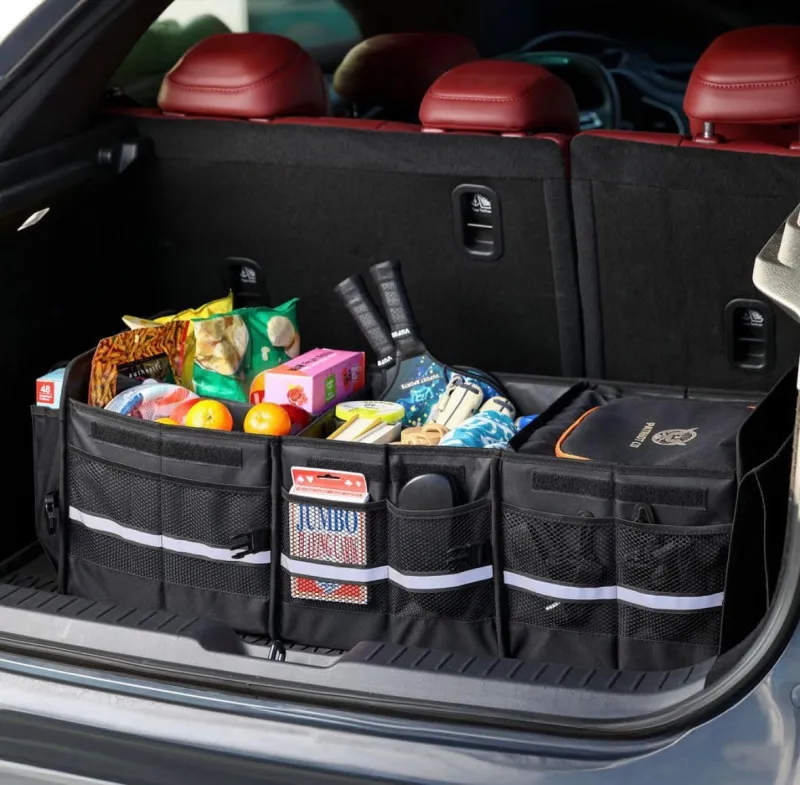
If you're going to commit to this, make your vehicle a willing partner. Keep a resistance band looped around your gym bag for parking lot activation work. Store a yoga mat or turf pad in your trunk for ground-based mobility (your knees will thank you when the parking lot is less than pristine). Use your car's speakers for a deliberate transition — something that mentally signals the shift from commute mode to athlete mode.
Your car brought you here. Let it help you show up ready.
The parking lot isn't wasted time before your workout. It's part of your workout. Start treating it that way, and watch what happens to your first working set.