Your Commute Is Talking — Are You Listening to the Data?

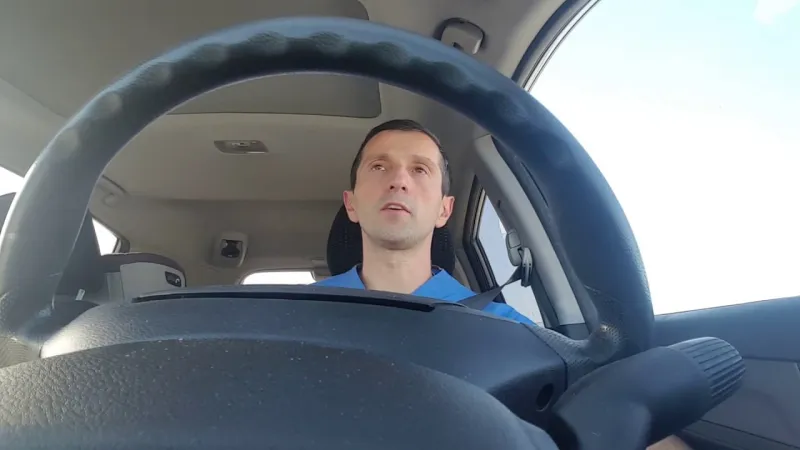
Photo: athlete checking smartwatch data in car dashboard morning commute, via as1.ftcdn.net
Most athletes obsess over their Garmin splits, their HRV scores, their sleep stages. But there's a daily data stream they're completely overlooking — the one that happens behind the wheel, twice a day, five days a week. Your commute isn't just getting you from point A to point B. It's a repeatable, measurable event that can tell you a surprising amount about your body's readiness to perform.
At AutoFit, we're all about squeezing performance value out of every minute you spend in the car. And this? This is one of the most underutilized hacks in the active driver's playbook.
Why Repetition Makes Your Commute a Perfect Baseline
Here's the thing about baselines — they only work when conditions stay relatively consistent. Your morning commute checks that box almost perfectly. Same route, similar timeframe, comparable traffic patterns. That consistency is exactly what makes it useful as a wellness metric.
When you start tracking commute data over weeks and months, deviations become meaningful. A drive that normally takes 28 minutes suddenly feels exhausting at 25. Your grip on the wheel tightens. Your jaw clenches at green lights. That's not traffic — that's your nervous system waving a red flag.
Sports scientists have long used resting heart rate and HRV as readiness indicators. Your commute can serve a similar function, especially when you layer in modern in-car tech.
The Metrics Worth Tracking
Drive Time vs. Perceived Effort
This one sounds almost too simple, but stick with it. Log your commute duration daily and pair it with a quick 1–10 rating of how mentally taxing the drive felt. Over time, you'll notice that high perceived effort scores — even on short drives — often precede poor training sessions or elevated fatigue.
Apps like Waze and Google Maps already track your drive times automatically. You just need to add the subjective layer. A quick voice memo right after you park is all it takes.
Heart Rate Variability During the Commute
Wearables like the WHOOP 4.0, Garmin Forerunner series, or even the Apple Watch can passively capture HRV data throughout your drive. What you're looking for isn't a single number — it's the trend. A consistently suppressed HRV during your morning commute compared to your weekly average is a strong signal that your autonomic nervous system is under strain.
Combine this with your post-commute HRV reading and you've got a before-and-after snapshot of how your drive is affecting your physiological state. Some athletes are shocked to discover their commute is more stressful than their actual workouts.
GPS Route Consistency and Detour Patterns
This one flies under the radar. Athletes who are fatigued, mentally scattered, or under-recovered often make different route choices — either unconsciously seeking less stimulation or simply not engaging with navigation efficiently. It sounds abstract, but GPS apps like Strava (yes, it works for driving too) or dedicated drive-tracking apps like Automatic can log your routes over time.
Notice you keep taking the longer, quieter back road even when there's no traffic? Your brain might be telling you it needs less input.
Departure Time as a Stress Proxy
Are you consistently leaving on time, or are you scrambling out the door five minutes late three days out of five? Chronic tardiness in your departure time is often a symptom of disrupted sleep, poor morning recovery, or elevated stress loads — all things that directly tank training quality. Your phone's calendar app or a simple spreadsheet can capture this without any extra gear.
Building Your Weekly Performance Map
Once you've got a few weeks of data, the real work begins — pattern recognition. Most serious athletes will start to see clusters. Maybe your Tuesday and Thursday commutes consistently score higher in perceived stress. Not coincidentally, those might also be the days that follow your hardest training sessions.
Or maybe Friday mornings show up as your lowest HRV days, which maps directly onto a weekly accumulation of sleep debt. That's your body telling you that Friday afternoon lifting session needs to be dialed back — or eliminated entirely.
Create a simple weekly grid. Columns for each day, rows for your key metrics: drive time, perceived effort, departure punctuality, HRV reading, and a brief note on training quality that evening. After a month, patterns will emerge that no fitness tracker alone would have surfaced.
Tech That Makes This Easier
You don't need a fully wired cockpit to pull this off. A few tools go a long way:
- WHOOP or Oura Ring — passive HRV and stress tracking that runs continuously, including during your commute
- Waze or Google Maps — automatic time logging and route history
- AutoSleep or Pillow (for iPhone users) — sleep quality data to cross-reference against commute difficulty
- A simple notes widget — honestly, a 10-second voice note after parking beats any complicated app for capturing perceived effort
Some newer vehicles — particularly Teslas and certain Ford and GM models with connected dashboards — even offer built-in stress and focus monitoring through biometric steering wheel sensors. If your car has it, use it.
What to Do With the Patterns You Find
Data without action is just noise. Once you've identified your commute-performance correlations, start making deliberate adjustments. If high-stress Tuesday drives consistently wreck your Tuesday evening workouts, consider shifting your harder sessions to Wednesday when your commute data shows lower stress loads.
If Friday commutes tank your HRV, protect Friday nights for sleep — not social commitments — and treat Saturday morning as a true recovery window rather than a makeup training day.
Your commute isn't a passive experience. It's a measurable, recurring event that your body responds to in real, trackable ways. Start treating it like the performance variable it actually is, and you'll have a baseline tool most of your competition hasn't even thought about yet.
Drive smarter. Train harder. The data's already there — you just have to start reading it.