How Your Suspension Setup Is Quietly Killing Your Squat
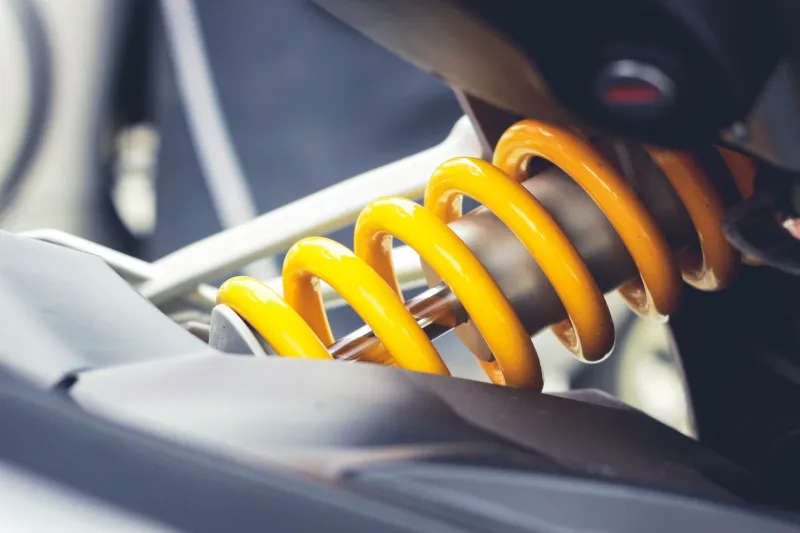
You dialed in your programming. You're eating enough protein. You're sleeping eight hours. And yet, every time you drop into a squat, your torso collapses forward like a folding chair. Your coach keeps cueing you. Nothing sticks.
Here's a possibility nobody's brought up: your car.
More specifically, your suspension geometry — the way your vehicle is tuned to absorb, transfer, and communicate road forces — is doing something to your body every single day that you're completely ignoring. And according to biomechanics specialists who work with both athletes and everyday drivers, that daily dose of chassis feedback is shaping your movement patterns whether you want it to or not.
The Nervous System Doesn't Know You're Just Commuting
Dr. Marcus Teel, a movement specialist and certified strength coach based out of Denver, Colorado, puts it bluntly: "Your nervous system is always learning. It doesn't clock out at 5 PM. Every hour you spend in a vehicle is an hour your proprioceptive system is being trained — for better or worse."
Proprioception is your body's ability to sense its own position in space. It's what tells your hips to stay stacked over your knees in a deadlift. It's what fires your core before you even consciously think about bracing. And it is heavily influenced by the sensory input your body receives from the surfaces it contacts.
When you're behind the wheel, your contact points are your seat, your feet on the pedals, and your hands on the wheel. The suspension system determines exactly what kind of vibration, tilt, and force feedback reaches those points — and your nervous system is cataloguing all of it.
Soft vs. Stiff: Two Very Different Athletic Outcomes
There's a reason sports cars have tighter, stiffer suspension setups. It's not just about cornering — it's about feedback. A firmer suspension transmits more road information to the driver, demanding constant micro-adjustments and keeping the core subtly engaged throughout the drive.
Contrast that with a heavily softened, comfort-tuned setup — the kind you'd find on a luxury sedan dialed for highway cruising. That setup absorbs everything. It's designed to isolate you from the road. Which sounds great for comfort, but from an athletic standpoint, you're essentially driving in a sensory deprivation tank for your stabilizing muscles.
"Soft suspension with excessive body roll puts the driver in a passive mode," explains Dr. Teel. "The body learns to just go along for the ride rather than actively stabilize. Over time, that passive pattern bleeds into the gym. I've seen it directly correlate with poor bracing mechanics and loss of tension at the bottom of compound lifts."
On the flip side, suspension that's too stiff — aggressive lowering springs with no corresponding tuning, for instance — can create the opposite problem. Constant harsh input can overtax the stabilizing muscles, leading to chronic low-grade fatigue in the erectors and hip stabilizers by the time you hit your afternoon training session.
Ride Height and Hip Flexor Tightness: The Connection Nobody Talks About
Here's where things get even more specific. If you've dropped your car significantly — say, two or more inches with a lowering spring kit — you've also dramatically changed the angle at which you enter and exit the vehicle. Repeatedly folding yourself into a low-seated position and pulling yourself back out shortens and loads the hip flexors in a very particular way.
For athletes, chronically tight hip flexors are the enemy. They pull the pelvis into anterior tilt, which flattens your lumbar curve, which is the exact mechanism that causes that forward lean in your squat.
Susan Park, a physical therapist in Austin, Texas who specializes in working with competitive powerlifters, says she sees this pattern constantly. "I ask all my clients about their daily environment, and that includes their car. A very low ride height combined with a deep bucket seat is one of the most reliable predictors of anterior pelvic tilt I've come across in clinical practice."
The fix isn't necessarily to raise your car back to stock height — though that's an option. It's about being intentional. Park recommends pairing a lowered suspension setup with a dedicated pre-drive and post-drive hip flexor protocol, and choosing seat configurations that allow for a more neutral pelvic position.
Steering Feedback and Core Bracing: An Underrated Training Signal
Electric power steering (EPS) systems, which are now nearly universal in modern vehicles, have largely eliminated the natural resistance feedback of older hydraulic setups. That's great for fuel economy and convenience. It's less great for the subtle forearm, shoulder, and core engagement that old-school steering demanded.
Many performance-oriented drivers are actually tuning their EPS systems — through aftermarket modules or manufacturer sport modes — to increase steering weight. And the athletic benefit here is real. Heavier steering keeps the driver physically engaged, which means the core is working as a stabilizing platform throughout the drive rather than sitting completely dormant.
Practical Suspension Recommendations for Training-Focused Drivers
So what should you actually do with all of this? Here's a practical starting point based on the expert input above:
If you drive a stock comfort-tuned vehicle: Consider a mild performance spring upgrade — something that reduces body roll by 20–30% without going full track setup. Brands like Eibach and H&R offer sport spring kits specifically designed for daily-driven vehicles that improve feedback without beating you up.
If you've gone aggressive with your lowering kit: Get a seat height assessment. If your hips are sitting below your knees at rest, you're fighting an uphill battle against anterior pelvic tilt every single day. Adjust seat position to keep hips at or slightly above knee level.
If your steering is numb: Use your vehicle's sport or dynamic mode if available. If not, look into whether your specific make and model supports an EPS tuning module. Even a modest increase in steering weight makes a measurable difference in upper-body engagement during long commutes.
For everyone: Treat your car exit like a movement warm-up. Before you walk into the gym, spend 60 seconds addressing whatever the drive just did to your body — hip flexor stretch, thoracic rotation, glute activation. Your nervous system has been in driver mode. Give it a reset before asking it to perform.
Your Car Setup Is Part of Your Training Environment
The AutoFit philosophy has always been that your vehicle isn't separate from your athletic life — it's part of it. The miles you log behind the wheel are hours your body is being shaped, for better or worse, by the mechanical environment around you.
Tuning your suspension with performance in mind isn't just about a better driving experience. Done thoughtfully, it's a legitimate tool for protecting and even enhancing your movement quality. Treat your chassis setup with the same intentionality you bring to your programming, and you might just find that your squat finally stops falling apart.