Your Dashcam Doesn't Lie — And Neither Does Your Training Log
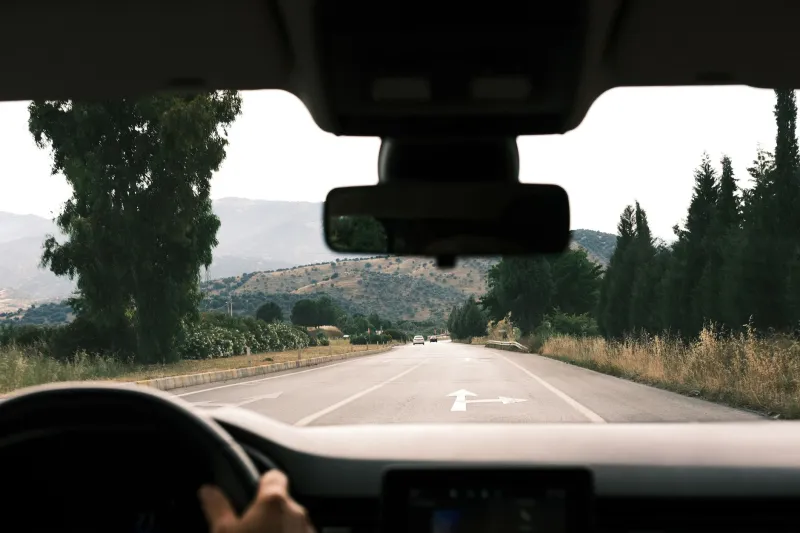
Most people install a dashcam for insurance purposes and forget it exists until something goes wrong. But there's a small, quietly obsessive group of performance-minded drivers who review their footage the same way athletes review game film — looking for inefficiencies, inconsistencies, and moments where discipline broke down.
If that sounds extreme, hear us out. Because the behavioral patterns that show up in dashcam footage are the same ones that determine whether you hit your fitness goals or stall out. Seriously.
Smooth Is Fast — In Driving and in Training
There's a phrase in motorsport that every track-day enthusiast eventually hears: smooth is fast. The fastest lap times don't come from aggressive, jerky inputs — they come from fluid, controlled transitions. Brake early, trail into the corner, get on the throttle progressively. Chaos is slow.
Now think about your best training cycles. The ones where you made consistent progress weren't the ones where you went all-out every session, skipped recovery, and maxed out every lift on a whim. They were the ones where you followed a program, progressed methodically, and managed intensity across the week.
When you pull up dashcam footage and see hard, late braking — the kind that throws your passengers forward — you're watching the same pattern that shows up when someone ego-lifts, skips warm-ups, and burns out by week three of a new program. Both are impulsive. Both are inefficient. Both leave performance on the table.
What Dashcam Footage Actually Reveals
Modern dashcams — especially models from brands like Garmin, Vantrue, or BlackVue — record more than just video. Many capture GPS data, G-force readings, speed logs, and even driver-assist alerts. When you review this data, a few key behavioral signatures emerge:
Acceleration Consistency — Are you getting on the throttle smoothly, or do you spike and back off repeatedly? Erratic acceleration patterns in traffic signal poor anticipation and reactive thinking. In a training context, this maps to programming ADD — constantly switching protocols before giving them time to work.
Braking Behavior — Late, hard braking is a sign of distraction or poor planning. Consistent, progressive braking shows situational awareness and patience. The athlete equivalent: someone who can regulate effort and back off when needed, rather than grinding into overtraining.
Speed Variance — How much does your speed fluctuate on the highway? Frequent, unnecessary speed changes burn more fuel and indicate a lack of sustained focus. This mirrors the kind of inconsistent training intensity that prevents progressive overload from actually taking hold.
Reaction to Disruptions — How do you handle a car cutting you off or an unexpected slowdown? Your emotional and physical response to disruption on the road is a real-time window into how you handle adversity in training and competition.
Using Your Car's Tech Ecosystem as a Mirror
Beyond dashcam footage, the modern vehicle is loaded with data-generating tools that performance-minded drivers can use for self-assessment.
Fuel Economy Readouts — Consistently poor fuel economy isn't just expensive; it's a signal that your driving inputs are inefficient. Treat your MPG the way you treat your training volume — something to optimize over time through better habits, not just raw effort.
Lane Departure and Collision Alerts — If your vehicle's driver assistance systems are firing frequently, that's a focus and attention problem. Frequent alerts during a commute correlate with the same mental fragmentation that makes it hard to stay present during a training session or dial in technique under fatigue.
Trip Logs and Route Data — Some drivers use apps like Automatic or their OBD-II port data to track driving efficiency over time. Setting a weekly goal for smoother driving scores is genuinely gamifying your discipline — and discipline, as any serious athlete knows, is the actual skill being trained.
The Self-Coaching Loop
Here's a simple protocol for using your car's tech to build the kind of self-awareness that carries over into fitness:
-
Review one week of dashcam footage — not to find mistakes, but to identify patterns. Are there specific times of day when your driving gets sloppier? Specific roads or traffic situations that trigger reactive behavior?
-
Map the patterns to your training — Do the same times or conditions show up in your workout log as low-effort sessions or missed days? Often they do.
-
Set a behavioral goal, not an outcome goal — Instead of "drive better," commit to "no hard braking on my morning commute for five consecutive days." Instead of "get stronger," commit to "hit every planned session this week without modifying the weights on impulse."
-
Review and repeat — The footage doesn't lie. Neither does the training log. Both are objective records of who you actually are versus who you think you are.
Discipline Is the Performance Variable
At AutoFit, we talk a lot about how your car and your fitness are extensions of the same lifestyle. But there's a deeper layer to that: both are expressions of your behavioral patterns. The driver who tailgates, brakes late, and accelerates aggressively is running on impulse. The driver who anticipates, plans, and executes smoothly is operating with athletic discipline.
Your dashcam is just a mirror. What it shows you — good or bad — is data you can use. And if there's one thing athletes know how to do, it's use data to get better.