Aftermarket Upgrades vs. Your Body: Do Premium Steering Wheels and Racing Seats Actually Change the Game?

Photo by Photo by Shooting Tyre on Unsplash on Unsplash
Spend enough time in serious automotive forums or competitive driving circles and you'll eventually encounter someone who swears their $2,400 Recaro seat changed their life. You'll also find someone else who spent half that, bought a budget bucket seat, and claims they can't tell the difference.
For active drivers — people who are putting real miles on their vehicles while also putting real work into their bodies — the question isn't just about aesthetics or lap times. It's about whether these upgrades actually protect and support a body that's being asked to perform at a high level both inside and outside the car.
We dug into the ergonomic research, talked to physical therapists who work with competitive athletes, and looked at what racing engineers and serious weekend warriors are actually saying about their setups. Here's what we found.
The Problem with Stock
Let's start with an honest assessment of what most factory interiors are designed to do. OEM seats, steering wheels, and pedal placements are engineered for the broadest possible range of body types, driving habits, and liability concerns. They're not designed for someone who's logging 300 miles a week and also trying to protect their hip flexors, lumbar spine, and shoulder girdle for the gym.
Physical therapist Dr. Renata Osei, who works with competitive CrossFit athletes and motorsport drivers in Atlanta, puts it bluntly: "Stock seats are a compromise. They're not bad for most people most of the time, but for someone who drives a lot and trains seriously, that compromise starts to show up as chronic tightness, postural asymmetry, and eventually pain."
The issue is multifactorial. Factory seat foam degrades faster than most people realize, losing its supportive properties well before the rest of the seat shows visible wear. Stock steering wheel diameters are often sized for general comfort rather than ergonomic precision. And pedal placement is almost never calibrated for individual anthropometrics.
What the Premium Tier Actually Gets You
Custom Steering Wheels
The aftermarket steering wheel market ranges from $150 bolt-on replacements to $1,500-plus custom setups with suede wraps, reduced diameters, and quick-release hubs. For the average commuter, the functional difference is minimal. For an active driver who's conscious of grip, forearm fatigue, and shoulder positioning, it's more nuanced.
A smaller diameter wheel (the competitive standard tends to sit between 320–350mm versus the 370–380mm common in factory cars) creates a quicker steering response but also requires more active engagement from the forearms and shoulders. That's a double-edged sword: better feedback and control, but higher fatigue load on muscles that might already be taxed from training.
Suede and leather wrap choices matter more than most people think. Suede grips better with less squeezing force required, which means less sustained forearm tension over a long drive — a legitimate benefit for someone who's already doing heavy pulling movements in the gym. Smooth leather looks clean but demands more grip effort, particularly in warmer climates.
The honest verdict: a quality aftermarket wheel in the $300–$600 range delivers real ergonomic value if you're driving more than an hour daily. Beyond that price point, you're largely paying for aesthetics and brand cachet.
Racing and Performance Seats
This is where the investment conversation gets genuinely interesting — and where the gap between premium and budget is most consequential.
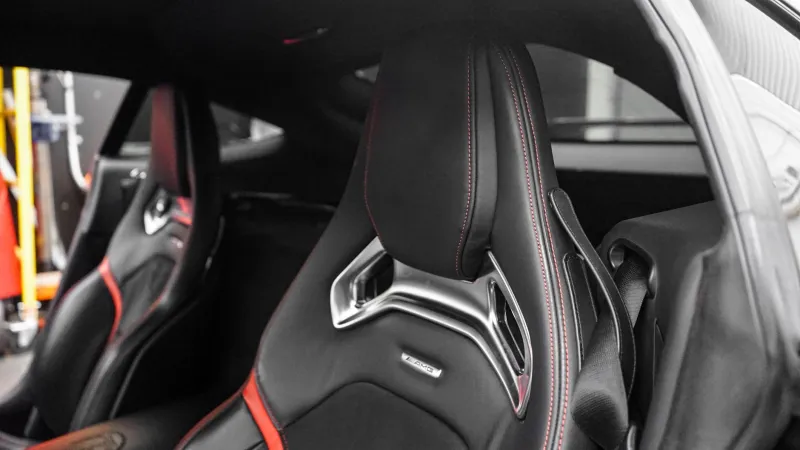
A true performance seat from a brand like Recaro, Sparco, or Bride does several things that factory seats don't: it positions your pelvis in a more neutral anterior tilt, it provides lateral support that reduces the micro-bracing your core does on every corner, and it typically uses foam compounds that maintain their support properties for far longer than OEM materials.
That core fatigue reduction is something Dr. Osei flags as genuinely significant. "When your seat doesn't support you laterally, your obliques and QL [quadratus lumborum] are doing low-level stabilization work constantly. Over a two-hour drive, that's meaningful fatigue going into muscles you're probably training hard. A proper bolstered seat takes that load off."
Budget bucket seats — the $150–$300 range available on Amazon and at most auto parts stores — provide the visual aesthetic of a racing seat but often fail on the foam quality and structural rigidity that make the expensive ones worth it. Several drivers we spoke with reported that cheaper seats actually worsened their back pain compared to the factory setup, primarily due to poor lumbar support and foam that compressed immediately under load.
For athletes serious about protecting their bodies, the sweet spot appears to be in the $600–$1,200 range — real performance foam, proper lateral bolstering, and FIA-rated structural integrity if you're doing any track work — without crossing into the stratospheric pricing of full custom race builds.
Adjustable Pedals and Footrest Positioning
This is the most overlooked component of the ergonomic equation. Pedal placement determines your hip angle, which determines your lumbar position, which cascades up through your entire spine. Factory pedal placement is often a compromise that leaves shorter drivers reaching forward (increasing lumbar flexion under load) and taller drivers cramped (creating hip impingement).
Afttermarket adjustable pedal kits, which typically run $80–$250 depending on the application, can genuinely recalibrate this chain. Racing engineer Marcus Webb, who builds track setups for amateur competitors in the Southeast, says it's the first thing he addresses in a new build: "Get the pedals right before you spend money on anything else. It changes everything about how the driver sits and how much energy they waste just managing their position."
The Real Numbers: What's Worth It?
Here's an honest breakdown for the serious active driver who's not building a race car:
| Component | Budget Option | Mid-Range Sweet Spot | Premium Tier | Functional Gain vs. Cost |
|---|---|---|---|---|
| Steering Wheel | $150–$250 | $300–$600 | $800–$1,500+ | Best at mid-range |
| Performance Seat | $150–$300 | $600–$1,200 | $1,500–$3,000+ | Worst at budget; good at mid |
| Pedal Adjustment | $80–$150 | $150–$250 | $300+ | Strong ROI at any tier |
| Seat Cushion/Insert | $40–$80 | $100–$200 | N/A | Surprisingly high ROI |
The $10,000 full custom interior build exists, and for professional competitors or serious track enthusiasts, it may be entirely justified. For the weekend warrior who trains hard and drives a lot, a more targeted $1,200–$2,000 investment in a quality seat, a functional steering wheel, and proper pedal positioning will deliver the bulk of the ergonomic benefit.
The Bottom Line for Athletes
Customization isn't just about looking fast. For people who take their physical performance seriously, the interior of their vehicle is a training environment that they spend hours in every week. Treating it like one — investing thoughtfully, prioritizing ergonomics over aesthetics, and understanding the actual biomechanical impact of each change — is entirely consistent with how serious athletes approach everything else.
You wouldn't train on broken equipment. Your car shouldn't be any different.