Invisible Resistance: How Highway Crosswinds Are Actually Training Your Core
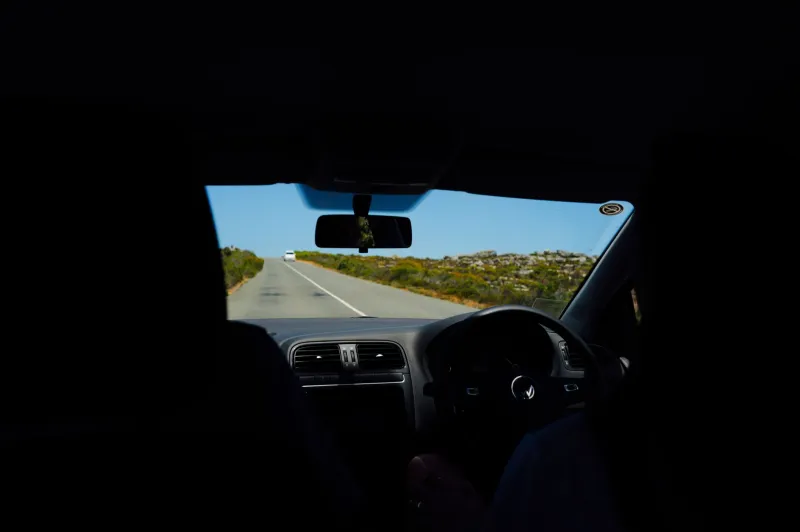
You're cruising at 75 mph on I-80 somewhere across the Wyoming flatlands. A gust hits from the left — maybe 30, 35 mph — and your car nudges right. Your hands correct automatically. Your hips shift. Your obliques engage. You barely notice any of it.
But your nervous system noticed. And if you're an athlete paying attention to how your body moves, you should too.
Crosswind driving is a low-key, underappreciated form of functional core training. It's not glamorous. It's not going to replace your plank progressions or your cable woodchops. But the neuromuscular patterns it activates are legitimately relevant to athletic performance — and understanding them can help you train smarter both behind the wheel and in the gym.
The Biomechanics of a Wind Gust
When a lateral gust strikes a vehicle, it generates a yaw moment — a rotational force around the car's vertical axis. The driver's job is to counteract that moment with steering input, which sounds purely mechanical until you consider what's actually happening in the body.
To apply precise, controlled steering correction, the driver must:
- Stabilize the pelvis against the seat to create a fixed base
- Brace the thoracic spine to transfer force efficiently from the core to the arms
- Engage the obliques and transverse abdominis to resist lateral trunk displacement
- Activate the hip flexors and adductors to anchor the lower body
This is, functionally, an anti-rotation and anti-lateral-flexion demand — the exact same muscular pattern targeted by exercises like Pallof presses, Copenhagen planks, and single-arm carries. The load is low. The duration is brief. But the motor pattern is real.
Why Active Drivers Develop Different Core Adaptations
Research in motorsport physiology — much of it originally focused on Formula and NASCAR competitors — has consistently shown that experienced drivers develop measurable differences in deep stabilizer activation compared to non-drivers. The continuous micro-corrections demanded by high-speed driving, including wind compensation, train the body to fire stabilizing muscles earlier and more efficiently.
This is called anticipatory postural adjustment, or APA. Elite athletes in virtually every sport demonstrate superior APA — their stabilizers fire before a movement, not in reaction to it. Crosswind driving essentially drills this response pattern repeatedly, every time conditions get gusty.
For an active driver who's also training in the gym, that's a meaningful adaptation. Better APA translates to more efficient power transfer in lifts, reduced injury risk during dynamic movements, and improved balance under fatigue.
The Grip Chain: From Steering Wheel to Foot Peg
Here's something most gym-focused athletes miss about wind correction: it's a full-chain event, not an isolated arm movement.
When you correct for a gust, force travels from your hands on the wheel, through your wrists, forearms, and shoulders, across your thoracic spine, down through your lumbar region, and into your hips and seat contact points. It's a closed kinetic chain response — the same structural principle that makes deadlifts and Olympic lifts so effective at building total-body coordination.
Drivers who maintain proper seating position (back flat against the seat, arms slightly bent, hips set back) are in a far better structural position to benefit from this chain. Slouched, arms-extended drivers are essentially breaking the chain — and they're also more likely to fatigue quickly under sustained crosswind conditions.
If you've ever done any coaching around athletic bracing, you already know the fix: rib cage down, core pressurized, neutral spine. Same cue. Different environment.
Making the Adaptation Intentional
Here's where the AutoFit approach kicks in — the idea that every aspect of your driving life is an opportunity to build the athlete underneath.
Most drivers passively react to crosswinds. You can choose to engage them actively. That doesn't mean being reckless or dramatic about corrections — it means bringing conscious awareness to the muscular response that's already happening.
On your next highway stretch, when conditions get gusty, try this:
- Notice your brace. When a gust hits, do you feel your core engage, or are you primarily reacting with your arms? If it's the latter, you're leaving adaptation on the table.
- Check your seating position. If your lower back is off the seat, you can't transfer force efficiently. Adjust and feel the difference.
- Breathe deliberately. Intra-abdominal pressure is a real thing. A controlled exhale into a braced core before a correction amplifies stability — the same principle coaches use during heavy lifts.
From the Car to the Gym: Direct Transfer Exercises
If you want to reinforce the patterns crosswind driving builds, these exercises hit the same neuromuscular targets:
- Pallof Press: Anti-rotation core work in a standing position, directly mimicking the lateral resistance demand of wind correction.
- Single-Arm Farmer's Carry: Trains anti-lateral-flexion and hip stability under load — essentially a loaded version of your hip anchor during a gust.
- Half-Kneeling Cable Chop: Develops the rotational control and thoracic bracing that makes steering corrections efficient rather than jerky.
- Copenhagen Side Plank: Hits the adductor-oblique connection that keeps your lower body anchored in the seat.
These aren't replacements for your existing program. They're complements — and knowing why they matter for your time behind the wheel makes them easier to prioritize.
The Wind Is Coaching You
Every crosswind gust on the highway is, in a small but real way, a training stimulus. Most drivers absorb it passively and move on. Athletes who understand the biomechanics can absorb it intentionally — and carry those adaptations into every squat, every sprint, and every overhead press.
The road is always teaching. The question is whether you're paying attention.