Your Car Is Wrecking Your Back — Here's How the Right Setup Fixes That
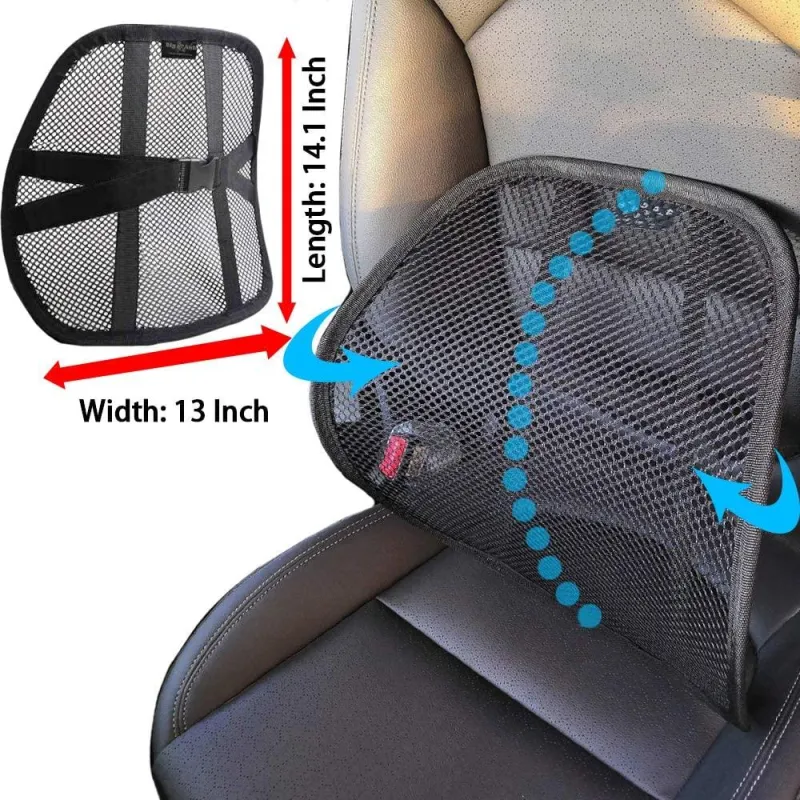
Photo: car seat lumbar support ergonomic driving posture adjustment, via www.gosupps.com
Let's be real for a second. You've probably spent time thinking about your wheels, your tint, your sound system. Maybe you've dropped real money on a cold air intake or custom floor mats. But when did you last think critically about how your seat is positioned — or whether your steering wheel is slowly turning your shoulders into a question mark?
Here's an uncomfortable truth: for a lot of active drivers, the car is the single biggest threat to spinal health. Not the gym. Not the trail. The car.
This isn't a scare piece. It's a call to start treating your vehicle's ergonomic setup the same way you treat any other performance variable in your life.
The Spine Doesn't Care How Cool Your Car Looks
Dr. James Okafor is a chiropractor in Chicago who works with athletes ranging from weekend warriors to semi-professional cyclists. He's also, by his own admission, a car guy. Which is why he gets particularly frustrated when clients show up with chronic lower back pain that traces directly back to their daily commute.
"The lumbar spine has a natural inward curve," he explains. "When you sit in a poorly adjusted seat for 45 minutes a day, five days a week, you're essentially teaching your body to abandon that curve. Over time, that becomes a structural problem that affects everything — how you squat, how you run, how you sleep."
The average American spends over an hour driving every single day. For road warriors, sales reps, and long-haul commuters, that number climbs fast. That's a lot of cumulative compression on the discs of the lumbar spine.
Lumbar Support: The Most Underrated Car Modification
Factory lumbar support on most vehicles is, frankly, mediocre. It exists, but it's designed for the median driver — not for your specific spinal anatomy.
Aftermarket lumbar support cushions are one of the most impactful and affordable modifications you can make. Options like the LoveHome Memory Foam Lumbar Support or the Everlasting Comfort Lumbar Pillow run between $25 and $60 and can genuinely change how you feel after a long drive.
For a more integrated solution, brands like Recaro and Sparco make sport seats with advanced lumbar adjustment systems. These are a bigger investment — we're talking several hundred to a few thousand dollars — but if you're clocking serious miles, they're worth every penny. Drivers who've made the switch consistently report reduced fatigue and better posture awareness.
Mike T., a sales rep from Nashville who drives roughly 30,000 miles a year, made the switch to aftermarket seats two years ago after his chiropractor essentially told him his spine was aging faster than his odometer.
"I thought it was going to be this massive project," he says. "But once I had proper lumbar support dialed in, I stopped getting that 3 PM lower back death feeling. My workouts improved. I was less stiff. It was honestly one of the best car investments I've ever made."
Seat Position: Most People Are Doing It Wrong
Beyond the seat itself, how you position your seat matters enormously. Most drivers sit too far back from the steering wheel, which forces them to reach forward — rounding the shoulders and flattening the lumbar curve in the process.
Dr. Okafor's general guidance:
- Hips slightly higher than knees — This preserves the natural lumbar curve and reduces hip flexor tightening.
- Knees should have a slight bend when your foot is fully on the brake — not fully extended.
- Seat back recline should be between 100 and 110 degrees — Not perfectly upright, but not laid back either. Straight-up 90 degrees is actually harder on your spine than a slight recline.
- Headrest should align with the back of your skull — Not your neck. If it's lower, it's doing nothing useful.
These adjustments take about five minutes and cost nothing. They're also the kind of thing most people never do because nobody told them it mattered.
The Steering Wheel: A Surprisingly Big Deal
Your steering wheel position affects your shoulders, neck, and upper back more than most people realize. A wheel that's too low pulls the shoulders into internal rotation. Too high, and you're tensing your traps constantly.
The ideal position keeps your arms at roughly a 120-degree angle at the elbow when your hands are at 9 and 3 o'clock. If your wheel telescopes and tilts, use both adjustments together to find that sweet spot.
For drivers who want to go further, aftermarket steering wheels with ergonomic grip profiles — think Momo or NRG — offer a more neutral wrist position compared to factory options. This matters more than it sounds if you've ever dealt with wrist or forearm tightness during long drives.
Seat Modifications as Athletic Performance Upgrades
Here's the reframe that Dr. Okafor pushes with his athlete patients: stop thinking about seat ergonomics as comfort and start thinking about it as performance.
"If you're a runner and your hip flexors are chronically tight from a bad seat position, your stride is compromised. If you're a lifter and your thoracic spine is stuck in flexion from years of hunching over a steering wheel, your overhead press is limited. The car is part of your training environment whether you acknowledge it or not."
That's a perspective shift worth sitting with (pun intended).
Customizing your vehicle for ergonomic performance isn't about being precious or high-maintenance. It's about being strategic. You wouldn't train in worn-out shoes. You wouldn't sleep on a broken mattress and expect to recover well. Why would you spend an hour or more every day in a setup that's actively working against your body?
Where to Start
You don't have to overhaul everything at once. Here's a practical upgrade path:
- Spend 10 minutes readjusting your seat position using the guidelines above. Free. Do it today.
- Add an aftermarket lumbar support cushion — under $50, immediate impact.
- Evaluate your steering wheel position and adjust the tilt and reach if your car allows it.
- If you're logging serious miles, look into sport seats — Recaro, Sparco, and Corbeau all make street-legal options with far superior ergonomic profiles.
- Talk to a chiropractor or physical therapist about your specific spinal needs. What works for the average driver may not be optimal for your anatomy.
Your car is already customized in a dozen ways. Make spinal health the next one on the list. Your back — and your PRs — will thank you.